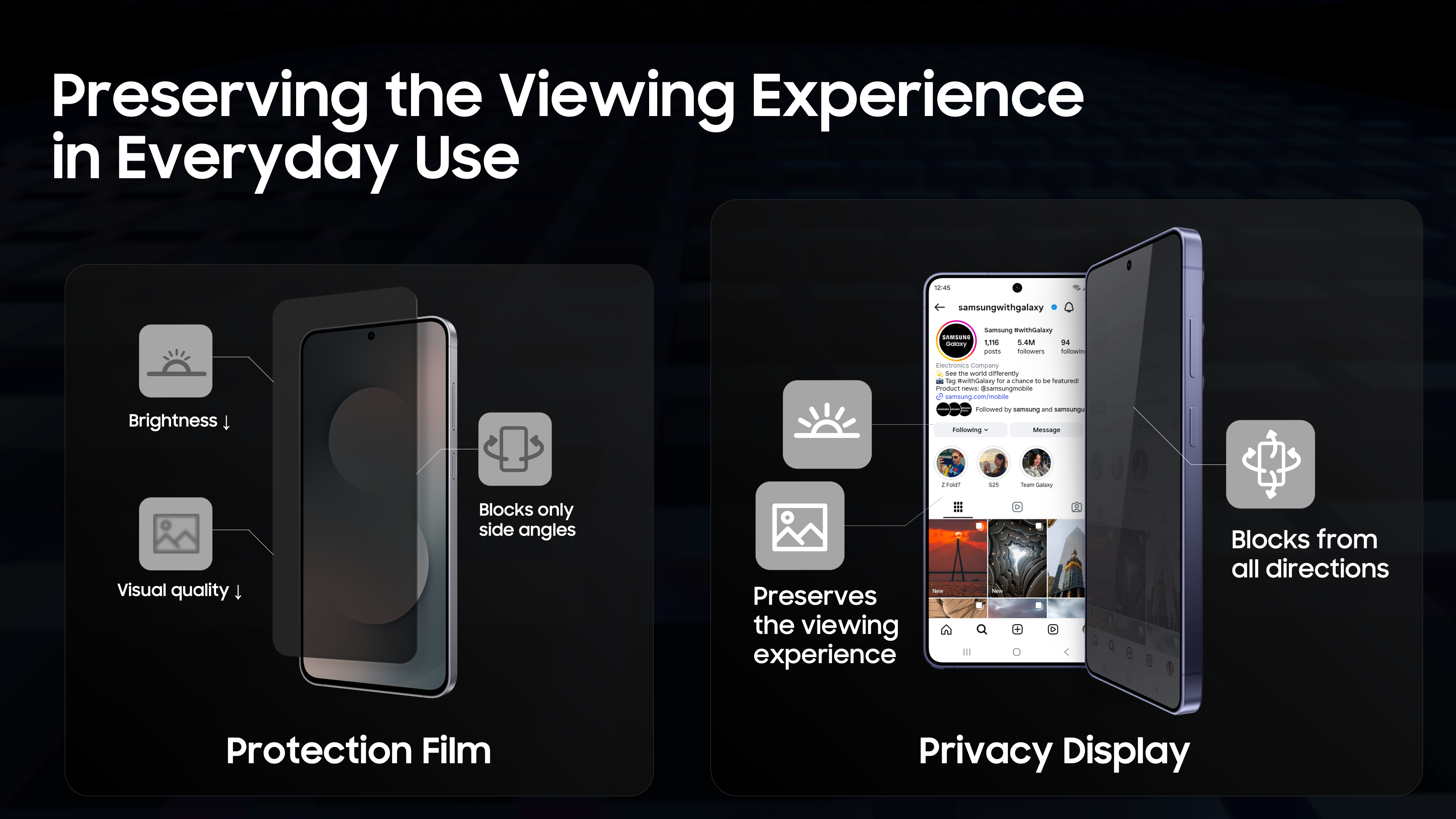

It’s taken years of work, but the Galaxy S26 Ultra’s Privacy Display feature is arguably the most innovative display feature in some time. It’s also a feature that comes with some noteworthy trade-offs.
Unlike many other OLED displays, the Galaxy S26 Ultra’s display separates the pixels into two groups: wide-angle and narrow-angle. When Privacy Display is off, all of the pixels are turned on. When it’s on, the wide-angle pixels are shut off.
A nice perk of the feature is it can work with specific apps and conditions. For example, you can have it on when you’re in the lock screen or when you receive a notification from a particular app.
That said, Android Central noticed there are a few negative effects to take note of.
To start, Privacy Display seems to impact the brightness, color depth, and even the display’s anti-reflective properties, even when the feature is off. More specifically, measurements shows the display being at least 300 nits dimmer than that of the Galaxy S25 Ultra.
Then there’s the display’s sharpness, which seems to take a hit on the Galaxy S26 Ultra. Android Central claims Samsung is using a sharpening filter to make up the difference, though it doesn’t appear to be noticeable all of the time.
Lastly, the Galaxy S26 Ultra continues Samsung’s trend of using low-frequency PWM dimming at a 480Hz rate. This is particularly poor for those who deal with PWM sensitivity, who will likely notice the low rate and experience headaches as a result.
At the end of the day, Privacy Display is a first-generation feature. Samsung will likely continue to iterate on it in future flagships, and these issues will hopefully go away as a result.

Leave a Reply